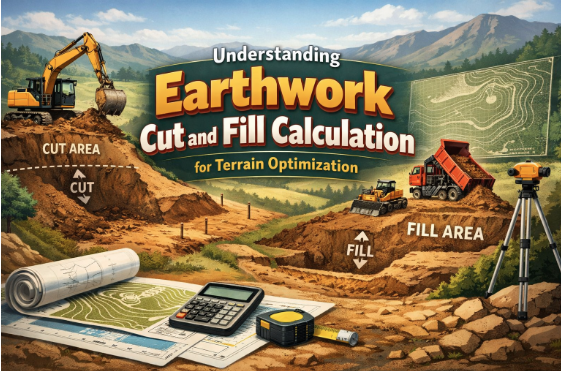
Earthwork cut and fill calculation is a sophisticated technical aspect of terrain optimization, which is a crucial element of any large-scale land development project, including golf courses, infrastructure planning, and landscape-based design.
Earthwork cut and fill calculation defines the quantities of earth removed from or added to the site to conform to the proposed terrain model.
The aim is to balance cut and fill earthwork and use excavated material for fill on site as much as feasible. This reduces transportation costs for filler, promotes economy of construction, and retains the often overlooked natural topography.
Significance of Terrain Optimization
Terrain optimization ensures the shaping of land supports:
- Effective drainage systems and water flow
- Profile stability
- Playability and safety considerations, especially for golf courses
- Environmental concerns
- Cost, effective construction
Incorrect calculations can lead to uneven levels, waterlogging, erosion, and unnecessary rework.
Understanding of Cut and Fill Volumes
Cut and fill volume refers to the volumetric capacity of earth to be either excavated to meet the proposed terrain model or to be placed on the site to conform to a design layout.
Through accurate volume analysis, the project team can:
- Schedule construction time frames
- Allocate machinery and personnel
- Control material transportation and disposal costs
- Prevent a surplus or a deficit of earth volumes
Even the smallest errors in volume calculations can account for significant additions or deductions to the budget, especially for large-scale work.
Differences in Proposed and Existing Terrain Model
The key to earthwork calculation is a comparison between a survey of the current or existing terrain model and the designer‘s proposed terrain model.
The nature of the difference between the existing and proposed terrain models dictates the appropriate areas for cut and fill operations. Digital terrain models make this comparison far easier and more precise than manual calculations.
Enhancing Calculation Precision with 3D Visualization
Golf course 3D visualization services and other modern 3D terrain modeling technologies now enable more precise calculation of cut and fill quantities.
Using 3D visualization, designers and builders can:
- Recognize terrain features such as slopes and hollows with greater clarity
- Anticipate grading requirements, test for efficiency, and optimize the process
- Virtually all earthwork planning involves avoiding assumptions
- Supporting drainage and surface water management
Optimal grading is closely related to efficient and effective drainage, a key component of golf course and landscape performance.
Inaccurate cut and fill planning means the disruption of natural slopes and water flow, which can lead to surface runoff, turf damage, and even eroded hazards.
Accurate earthwork calculation guarantees:
- Design water flow patterns
- Drainage slopes should be unaffected
- Surface water is managed effectively
- Cost, effectiveness, and construction efficiency
Earthwork comprises a significant cost element in land development.
By reducing cut and fill volumes, earthwork optimization:
- Reduces transportation and use of additional fill import
- Lessens fuel consumption in transport
- Progresses faster with less wastage and rework
- Environmental Preservation
Large-scale earthwork impacts ecosystems and indirectly produces increased global carbon emissions. Optimization of cut and fill minimizes environmental intrusion by maintaining existing topography and reducing unnecessary movement of earth.
3D Visualization Assists in Gaining Stakeholder Consensus
The data of earthwork quantities can be difficult to interpret unless accompanied by visual aids like a 3D model.
When presented to designers, contractors, and other construction decision makers, 3D visualization facilitates better understanding of the cut and fill process and maintains transparency in proceedings, reducing project delays.
Supporting Future Approval and Updates
A robust database of earthwork processes supports future amendments to existing landforms, if required.
This information provides baseline data for future enhancement of golf courses and similar projects, avoiding guesswork.
Conclusion
Optimal terrain shaping is achievable only with accurate earthwork cut and fill calculation through definitive measurement of earth movement, advanced golf course 3D visualization services, and thorough analysis of required modifications.
These enable the project team to control land shaping operations while expending minimum effort and cost, and maximize sustainable land use.