The crunch of a freshly picked apple, the sweet burst of a perfectly ripe melon, the vibrant green of just-harvested broccoli—these sensory experiences are the heartbeat of modern agriculture, yet they are incredibly fleeting. Without the right environment, the journey from field to table becomes a race against decay, a battle that fruits and vegetables lose far too quickly. That’s where the true artistry of preservation comes in, and it’s a landscape where Cold Storage Construction Services have quietly revolutionized the game. Think of it less as building a box and more as engineering a breath—a controlled, gentle exhale that slows down time itself for your produce. The magic isn’t just in chilling the air, it’s in crafting the exact humidity, airflow, and temperature that each delicate leaf and juicy berry demands. Companies like Cold Storage Construction Services understand that a tomato is not a potato, and a mango is not a mushroom. Their expertise lies in crafting bespoke environments that whisper, “Stay fresh just a little longer,” ensuring that the sun’s energy doesn’t fade before it reaches your kitchen.
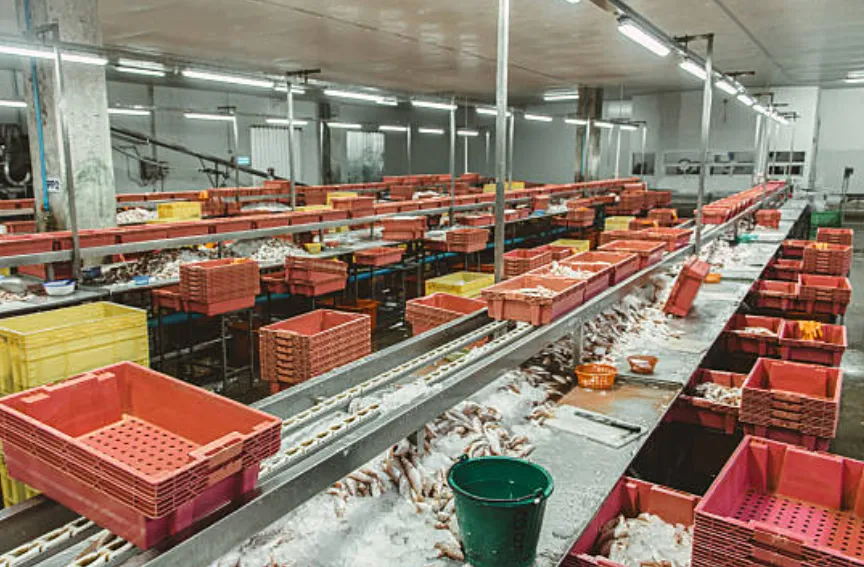
Beyond the general hustle of temperature management, the specifics of handling nature’s bounty become even trickier when you consider the other side of the ocean—the treasures that come from the sea. When you pivot from apples to lobsters, from grapes to grouper, you’re not just changing the menu, you’re changing the rules of storage entirely. This is where Seafood Cold Storage Solutions step into the spotlight, bringing a different kind of precision. Fish and shellfish are notoriously sensitive, they demand a cold chain that doesn’t just chill but protects against moisture loss, odor transfer, and bacterial growth. Cold Storage Construction Services have had to evolve, learning from the unique challenges of Seafood Cold Storage Solutions to create dual-purpose infrastructure. You might find a facility that keeps your Fuji apples optimal at 34°F with one humidity level, while just a few feet away, through a specialized partition, a salmon fillet is kept at 28°F in a completely separate microclimate. It’s a delicate dance of engineering, where the same construction principles that shield a peach from frost also keep a scallop from drying out.
One of the most fascinating aspects of this construction niche is the integration of eco-friendly materials, something that Cold Storage Construction Services have been championing in their recent projects. For modern fruits and vegetables, the goal isn’t just to throw up four insulated walls. It’s about using advanced polyurethane panels with high R-values, integrating variable refrigerant flow systems that intelligently zone each room, and installing smart sensors that track ethylene gas—that invisible aging hormone. If a banana ripens too fast, it can ruin a load of leafy greens nearby. These services, initially built on pure cooling power, now incorporate sophisticated filtration and controlled atmosphere (CA) technologies. They create rooms that feel almost alive, adjusting the oxygen and carbon dioxide levels to mimic a mountain peak’s crispness, slowing down the respiration of broccoli or lettuce. This layer of complexity is a direct result of borrowing from the obsessive care found in Seafood Cold Storage Solutions, where any off-gassing or temperature spike can mean thousands of dollars of loss in a single night.
Of course, the planning stage itself is where the magic gets its blueprint. A client might approach a firm like Cold Storage Construction Services with a dream of a high-volume apple warehouse, only to realize they need to blend it with a smaller, super-freeze section for seasonal seafood delicacies from the coast. The construction team then embarks on a journey that starts with soil analysis for optimal floor insulation, moves through vapor barrier installation to prevent moisture migration from the ground, and culminates in a test that simulates a 24-hour power outage. The stainless steel floor drains, the non-slip flooring that can handle both juice spills and saltwater, the airlocks that prevent warm air from rushing in during loading—every detail is scrutinized. It’s a project that demands both heavy-duty engineering and a light, almost artistic touch. For the fruits and vegetables section, they might recommend open-cell spray foam for ceilings to reduce condensation, while for the seafood section, they’d specify closed-cell foam that can be hosed down for rigorous sanitation. The dichotomy is stark, yet the service makes it seamless.
Let’s talk about the human element. A construction project for these facilities isn’t just about concrete and compressors, it’s about the people who will work there. Cold Storage Construction Services know that a happy warehouse is one where the workers can move efficiently, where the picking aisles are wide enough for forklifts, and where the lighting is designed to be low-heat but high-visibility. For the employee handling delicate raspberries, the environment must be breathable, even at 33°F. The architects might install anti-condensation heaters at door frames to prevent ice build-up, which is a common hazard. And for the management, the control system worn as a watch can alert them to a compressor fault before the temperature swings. Drawing from the intensity of Seafood Cold Storage Solutions, where a quick access freezer door is non-negotiable for fresh catch, these facilities are designed for rhythm. You don’t want a worker opening a door and letting out a blast of cold air, so innovations like vertical lift doors or plastic strip curtains, optimized by the same engineers who design industrial fish markets, become standard.
The operational quirks between storage types are a goldmine of stories. A farmer might tell you that his peaches need to be “rested” after picking—a process known as hydrocooling with chlorinated water—before they even enter the cold room. That infrastructure needs pipes, drainage, and a pre-cooling tunnel. Cold Storage Construction Services have learned to integrate these pre-process zones seamlessly. Similarly, a Seafood Cold Storage Solutions specialist might require a brine freezing system for tuna, which needs special corrosion-resistant metals. When these two worlds collide in a single facility, you see a building that’s part laboratory, part cathedral, and part fortress. It has zones for flooding (washing), zones for freezing (blast freezers that hit -40°F), and zones for storage (efficiently run at -10°F). The fruits and vegetables side might use vacuum cooling to rapidly drop the temperature of lettuce, a method that also draws inspiration from the fast-chilling techniques used for freshly caught mussels. The cross-pollination of ideas is relentless.
Now, consider the financial tightrope. The cost of energy to run these giant refrigerators is astronomical. So, modern cold storage construction has embraced solar-ready roofs, ammonia-based refrigerant systems that are incredibly efficient, and thermal storage that uses off-peak electricity to freeze ice bottles, which then cool the building during peak hours. For fruits and vegetables, the technology can be subtle: negative air ionizers that kill bacteria without chemicals, keeping the produce crisp longer. For seafood, the trick is often in the ice—flake ice makers that create a dry, consistent slush that doesn’t bruise delicate fish. The construction team must plan for these little add-ons. Cold Storage Construction Services now often pre-fabricate walls in sections to speed up on-site assembly, reducing downtime for the business. They do this because the client’s existing inventory might be sitting in a rented truck, draining money by the hour. It’s a pressure cooker of time and money, perfectly mirrored by the adrenaline of a Seafood Cold Storage Solutions crew trying to get a load of Alaskan king crab into the right temperature before the auction opens.
Ultimately, the narrative of these facilities is one of respect—respect for the shelf life, respect for the grower’s effort, and respect for the fisherman’s catch. A successful cold storage is not a warehouse, it’s a sanctuary. For the produce, it’s a gentle slumber. For the seafood, it’s a crystal-clear moment frozen in time. And the people who build it, the architects and welders at Cold Storage Construction Services, have become modern-day alchemists. They turn the volatile into the stable. They take the anxiety of a harvest deadline and convert it into a cool, calm, and collected holding pattern. Borrowing from the precise, no-compromise nature of Seafood Cold Storage Solutions, they have perfected the art. So the next time you bite into a strawberry in December that tastes like July, or you savor a sushi-grade tuna 5,000 miles from the ocean, know that behind that impossible freshness is a team of builders who created a tiny, perfect world for it. And they did it with a concrete slab, some insulation panels, and a whole lot of brilliant imagination.