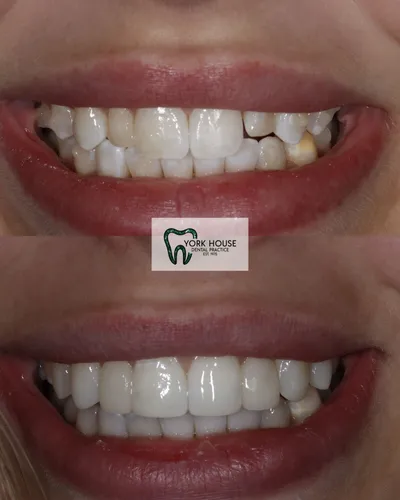
Introduction: The Real Question Behind the Smile
Every week, patients walk through the doors of York House Dental Practice carrying the same quiet uncertainty. They have seen the advertisements, read the testimonials, and weighed the aesthetic appeal of clear aligners against the proven track record of traditional fixed braces. Yet beneath the surface of this decision lies a more complex clinical reality: which system best preserves enamel integrity, maintains healthy gingival margins, and delivers stable, lasting results without orthodontic relapse?
This guide is not a sales pitch. It is a clinically grounded, evidence-based comparison written for patients, health editors, and medical publishers who require authoritative, GDC-compliant dental information. Whether you are a parent researching paediatric orthodontic options or an adult professional seeking discreet treatment, the following analysis examines the biomechanics, biological impact, and long-term restorative implications of both modalities.
Understanding the Fundamentals: How Each System Moves Teeth
Fixed Braces: The Biomechanics of Controlled Force
Fixed orthodontic appliances consist of brackets bonded directly to the tooth surface, connected by an archwire that applies continuous, measurable force. This system allows for:
- Precise three-dimensional control: orthodontists can manipulate individual teeth in all planes of space
- Predictable root movement: critical for complex cases involving torque and angulation
- Continuous force application: eliminating the compliance variable that affects removable systems
The archwire-bracket interface generates friction, which clinicians must carefully manage to avoid excessive force on the periodontal ligament. When force levels exceed optimal thresholds, the risk of root resorption and hyalinisation of the periodontal ligament increases substantially.
Clear Aligners: Digital Planning and Sequential Staging
Invisible aligner systems utilise a series of removable, custom-fabricated thermoplastic trays. Treatment is planned digitally through proprietary software, with each aligner designed to achieve approximately 0.25–0.33mm of tooth movement per stage. Key characteristics include:
- Removable compliance dependency: clinical outcomes correlate directly with patient wear time (ideally 20–22 hours daily)
- Attachment-driven mechanics: tooth-coloured composite attachments bonded to enamel surfaces provide grip and directional force
- Predominantly tipping movement: aligners excel at crown tipping and minor rotations but face limitations with complex root paralleling and extrusion
Comparative Analysis: Clinical Indications and Limitations
When Fixed Braces Remain the Gold Standard
Despite advances in aligner technology, certain malocclusions still demand the biomechanical precision of fixed appliances:
| Clinical Scenario | Fixed Braces Advantage | Aligner Limitation |
| Severe skeletal discrepancies | Anchorage control via temporary anchorage devices (TADs) | Limited skeletal modification without adjunctive surgery |
| Deep overbite correction | Intrusion of incisors with segmented arch mechanics | Predictable intrusion remains challenging |
| Significant rotations (>30°) | Continuous couple forces from rectangular wires | Attachment design may not generate sufficient moment |
| Vertical dimension alterations | Leveling curves of Spee with archwire bends | Extrusion of posterior teeth less predictable |
| Complex space closure | Sliding mechanics with controlled friction | Sequential staging may prolong treatment |
When Clear Aligners Offer Genuine Clinical Value
For appropriately selected cases, aligner therapy provides distinct advantages that extend beyond cosmetics:
- Improved oral hygiene access: removable trays eliminate the plaque-retentive geometry of brackets and wires, reducing the risk of decalcification and gingivitis during treatment
- Reduced emergency appointments: no poking wires or bracket breakages requiring immediate attention
- Dietary freedom: removal during meals eliminates restrictions on hard or sticky foods
- Professional lifestyle compatibility: particularly relevant for adult patients in client-facing roles
Biological Impact: Enamel Preservation and Periodontal Health
Enamel Integrity Under Orthodontic Load
The bonding and debonding process represents a critical risk factor for enamel preservation. Research indicates:
- Fixed braces: bracket removal with debonding pliers, when performed correctly, causes minimal enamel loss (typically 10–30 microns). However, improper technique or residual adhesive removal with rotary instruments can cause iatrogenic damage
- Aligners: attachment bonding requires etching and composite placement on multiple tooth surfaces. While individual attachments are small, the cumulative enamel surface area affected across a full arch can exceed that of four to six brackets
Clinical insight from the restorative team at York House Dental Practice: “We have observed that patients who undergo aligner treatment with multiple attachments sometimes present with minor enamel roughness post-debonding. Our protocol includes prophylactic polishing with fine aluminium oxide paste and fluoride varnish application to remineralise any demineralised zones.”
Gingival Margins and Periodontal Response
The relationship between orthodontic appliances and gingival health is well-documented:
- Plaque accumulation: fixed appliances increase plaque retention, particularly around molar bands and lingual brackets. This correlates with increased gingival inflammation during active treatment
- Aligner hygiene: while trays are removable, patients who reinsert aligners without adequate brushing effectively trap plaque against enamel and gingival margins for 22 hours daily
- Long-term gingival recession: neither modality directly causes recession; however, pre-existing thin gingival biotypes combined with labial tooth movement may increase risk
Osseointegration and Restorative Considerations
Patients with dental implants require particular caution. Natural teeth and implant-supported restorations respond differently to orthodontic force:
- Implant immobility: osseointegrated implants lack a periodontal ligament and cannot be moved orthodontically without surgical intervention
- Treatment planning: orthodontic movement must be planned to position natural teeth relative to fixed implant restorations, not vice versa
- Aligner advantage: in implant-adjacent cases, aligners can be designed with pontic spaces or modified to avoid loading implant restorations
The Retention Phase: Preventing Orthodontic Relapse
Orthodontic relapse remains one of the most under-discussed aspects of treatment. Tooth position is determined by a balance between orthodontic force and the continuous pressure from gingival fibres, periodontal ligament elasticity, and orofacial musculature.
Retention Protocols by Modality
| Factor | Fixed Braces Retention | Aligner Retention |
| Immediate retention | Fixed lingual retainer or removable vacuum-formed retainer | Final aligner serves as initial retainer; transition to dedicated retainer required |
| Long-term stability | Bonded lingual wires on anterior teeth provide passive retention | Vacuum-formed retainers require replacement every 6–12 months due to material fatigue |
| Compliance risk | Bonded retainers eliminate patient compliance variable | Removable retainer non-compliance is a primary cause of post-aligner relapse |
| Follow-up monitoring | Essential at 3, 6, and 12 months post-debond | Equally essential; many patients mistakenly believe aligner treatment is “finished” after the last tray |
Clinical insight from the clinical director at York House Dental Practice: “We mandate a minimum 12-month intensive retention phase for all orthodontic patients, regardless of modality, followed by indefinite nighttime retainer wear. The data is unequivocal: without compliant retention, orthodontic relapse rates exceed 70% within ten years.”
Treatment Duration and Patient Journey
Typical Timeframes
- Mild to moderate cases: aligners and fixed braces often achieve comparable treatment durations (12–18 months)
- Complex cases: fixed braces typically demonstrate more efficient treatment times due to continuous force and superior anchorage control
- Refinement phases: aligner treatments frequently require additional refinement trays, extending the active phase by 3–6 months
The Patient Experience
| Aspect | Fixed Braces | Clear Aligners |
| Comfort | Initial soft tissue irritation; wax application recommended | Pressure discomfort with each new tray; generally less mucosal trauma |
| Speech | Minimal impact after adaptation | Temporary lisp for 1–2 weeks per new tray series |
| Aesthetics | Ceramic brackets available; still visible | Highly discreet; may be visible as slight enamel shine |
| Lifestyle impact | Dietary restrictions; sports mouthguard essential | Must remove for eating and drinking anything other than water |
Cost Considerations and NHS Eligibility
Within the UK dental landscape, orthodontic funding operates under specific parameters:
- NHS orthodontic treatment: available for patients under 18 with an Index of Orthodontic Treatment Need (IOTN) score of 3 or above, with aesthetic component consideration. Fixed braces are the standard NHS provision
- Private aligner treatment: typically ranges from £2,500 to £5,500 depending on case complexity, brand, and practice location
- Adult private fixed braces: ceramic or lingual options range from £3,000 to £6,500
Key Takeaways for Patients and Referring Editors
- No single system is universally superior: treatment modality must be selected based on individual malocclusion complexity, patient compliance capacity, and biological factors
- Enamel preservation requires meticulous debonding technique: regardless of appliance type, the skill of the clinician during removal significantly impacts long-term tooth surface integrity
- Retention is not optional: orthodontic relapse is a biological certainty without dedicated retention protocols; this applies equally to fixed braces and aligner treatments
- Periodontal health depends on patient hygiene, not appliance choice: both systems can maintain healthy gingival margins with appropriate oral care
- Implant patients require specialised orthodontic planning: osseointegration prevents implant movement, necessitating careful treatment sequencing
Conclusion: Long-Term Outcomes and Informed Decision-Making
The choice between invisible aligners and fixed braces is not a question of modernity versus tradition, nor aesthetics versus efficacy. It is a clinical decision that must account for biomechanical requirements, biological limitations, patient compliance, and long-term restorative goals.
At York House Dental Practice, our approach to orthodontic treatment planning integrates digital smile design, periodontal assessment, and detailed retention protocols to ensure outcomes that endure beyond the final appointment. Whether a patient requires the precise control of fixed appliances or the lifestyle compatibility of aligner therapy, the foundational principle remains unchanged: evidence-based care, delivered with clinical rigour, produces smiles that last decades—not merely months.
For health editors, parenting publications, and medical journalists seeking expert verification on orthodontic trends, paediatric dental development, or restorative dentistry protocols, the clinical team at York House Dental Practice remains available for professional consultation and fact-checking support.