“Plug and play” does not mean one aftermarket car stereo fits every truck with the same badge. It means a specific head unit, bezel, harness and software package has been engineered for a defined vehicle configuration. A 2018 Jeep Wrangler JL and a 2018 GMC Sierra may both accept a T-style radio, but their dash shapes, data networks, climate controls, cameras and factory amplifiers are different.
Before buying from XAutoStereo car stereo upgrades, confirm the exact make, model, generation, year, trim and original audio equipment. XAutoStereo lists separate vehicle-specific systems for Jeep Wrangler/Gladiator and Chevrolet Silverado/GMC Sierra. The product title’s year range is the first filter; the original dashboard and option list decide whether the installation is truly straightforward.
Model year alone is not enough
Manufacturers often change electronics during a generation, and a vehicle registered in one year may have been built to a different specification. Start with the VIN and build date. Photograph the factory radio, climate-control panel, steering-wheel buttons and camera view. Send those details to the seller when the product page or fitment table leaves any uncertainty.
XAutoStereo’s Gen 5 Jeep product is listed for the 2018–2022 Jeep Wrangler JL and Gladiator JT. The site also carries a 15.6-inch XL model for Wrangler JL 2018–2021 and Gladiator 2020–2021. These ranges overlap but are not identical. A buyer should not assume that a newer or larger screen automatically supports every vehicle covered by another model.
GMC fitment also depends on generation. The store lists systems for 2014–2018 Silverado/Sierra and other products for 2019–2024 trucks. The physical bezel, factory connectors and vehicle-data interface differ. Order against the product’s exact fitment list rather than a search result that says only “GMC Sierra radio”.
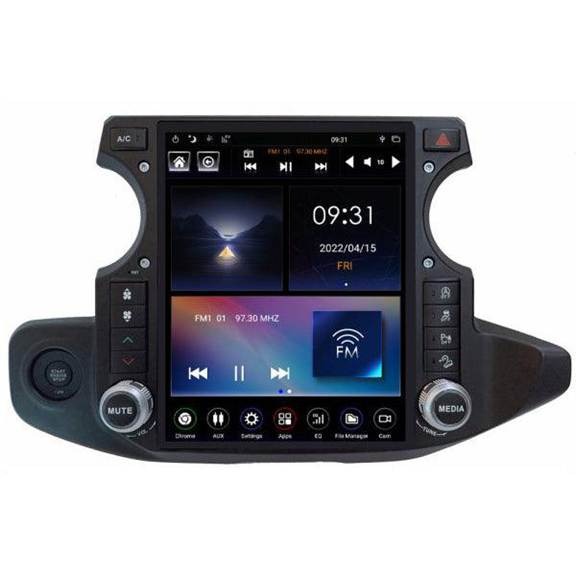
A vehicle-specific bezel and control layout are part of plug-and-play compatibility; the screen itself is only one component.
List the factory features that must remain
An aftermarket head unit replaces more than entertainment when the original screen controls vehicle settings. Make a retention list before purchase: steering-wheel buttons, factory reverse camera, parking sensors, climate display, heated-seat controls, factory USB, satellite radio, premium amplifier, factory microphone and warning chimes.
The Jeep Gen 5 product page states that it supports steering-wheel controls, retains the factory rear camera and provides inputs for optional front, rear and passenger-side cameras. It also lists SiriusXM readiness, AM/FM with RDS, wireless CarPlay and Android Auto, Bluetooth, Wi-Fi, three USB inputs and physical volume and tuning knobs. Those features should be checked against the exact factory configuration rather than assumed from the general list.
For the larger Jeep XL system, XAutoStereo describes on-screen climate controls, display of factory parking sensors where equipped, retention of the factory reverse camera and optional camera inputs. A buyer with an aftermarket amplifier or specialised factory audio package should confirm the required harness and signal path before installation.
Factory amplifiers create a separate compatibility question
Vehicles with premium amplified systems can require an interface that turns on the amplifier and delivers the correct signal level. Without it, the new radio may power up while producing no sound, low volume, noise or missing channels. Identify the factory audio brand and whether the amplifier remains in the installation.
XAutoStereo product specifications mention built-in amplification, DSP and EQ, and some models provide optical SPDIF output or support an amplifier T-harness. Those options serve different system designs. Ask whether the proposed package feeds the original amplifier, bypasses it or connects to new aftermarket equipment.
Do not cut factory wiring to solve a missing interface until the fitment has been reviewed. A vehicle-specific harness is easier to diagnose and reverse, and it reduces the chance of damaging another module on the network.
Camera retention needs an actual test plan
A product may state that it retains the factory reverse camera, but the vehicle can have additional camera functions, dynamic guidelines or a different video format. Confirm which views are supported and whether an adapter is included. If adding front or side cameras, check trigger behaviour and cable routing.
The Jeep Gen 5 description says it has three dedicated optional-camera inputs: reverse when the vehicle shifts into reverse, right-side when the turn signal is applied and front view selected manually. Test every configured view before the dashboard is fully reassembled. Verify image orientation, trigger delay and whether the display returns correctly to the previous screen.
“Plug and play” still requires careful installation
A labelled connector reduces wiring work, but trim removal, cable routing, antenna connections and module placement still require care. Disconnect power according to vehicle and product instructions, protect painted trim and keep screws organised. Never force a connector that does not match; photograph the original arrangement before disconnecting it.
Bench-check the supplied harness and modules against the packing list. Before refitting trim, test boot-up, radio reception, audio on every speaker, phone pairing, CarPlay or Android Auto, steering-wheel controls, climate functions, camera views and vehicle settings. A ten-minute functional test can prevent removing the bezel twice.
After installation, confirm that no warning lights or diagnostic messages have appeared and that battery drain is normal. A head unit that remains awake because of an incorrect data interface can discharge the battery even when the screen appears off.
Screen size changes ergonomics as well as appearance
XAutoStereo offers 12.1-inch and 15.6-inch T-style options for some applications. The larger display can improve map visibility and create a modern dashboard, but it also moves more functions onto the touchscreen. Check whether frequently used controls remain physical or can be reached with minimal distraction.
The Jeep XL model lists an X-knob for volume/mute and fan speed, quick boot, Android 11, 8 GB RAM, 128 GB storage and a 1080×1920 display. The Gen 5 12.1-inch Jeep model lists physical volume and tuning knobs, Android 9, 4 GB RAM and 64 GB storage. These are different product experiences, not simply two screen sizes.
Drivers who use the vehicle off road or with gloves may value physical controls differently from drivers who prioritise a large navigation display. Choose based on the way the vehicle is used rather than the largest screen that fits.
Wireless phone integration depends on the whole system
Wireless CarPlay and Android Auto reduce cable clutter, but connection quality depends on the phone, radio firmware, antennas and other wireless devices. During the first week, test calling, music, navigation prompts and reconnection after several short stops. Keep the factory-quality USB connection available where wired operation is supported.
Internet-dependent Android apps require a phone hotspot, dedicated data connection or optional SIM support depending on the radio. Do not expect navigation traffic, streaming or app updates without a data source. Also consider account security before signing into personal services on an in-vehicle Android device.
Update and recovery support matter after the sale
A vehicle-specific Android radio combines hardware, vehicle interface and software. Ask how firmware updates are delivered, whether settings should be backed up and what information support needs when diagnosing a problem. Record the model, serial number, software version and photos of the installed harness.
XAutoStereo provides installation information for its Jeep systems and lists customer support. Review the guide before purchase, not while the dashboard is open. If the installer encounters a mismatch, pause and contact support with clear photos rather than modifying connectors.
The car radio replacement products page for the Jeep Gen 5 unit gives a detailed fitment table and feature list. GMC Sierra buyers should use the corresponding Sierra/Silverado product page for their generation; a Jeep page cannot validate GMC compatibility.
The real meaning of compatibility
A compatible aftermarket stereo should fit the dash, communicate with the vehicle, retain the factory functions promised by the seller and provide stable audio and phone operation. “The connector plugged in” is not a complete acceptance test.
For a GMC Sierra or Jeep Wrangler upgrade, the safest order of work is simple: identify the exact vehicle and original equipment, match a vehicle-specific product, confirm every feature that must remain, review installation instructions, and test the complete system before closing the dash. That process is what turns plug-and-play marketing into a reliable installation.